
The Ultimate Guide to Choosing Your Wedding Flower Colours
Choosing the perfect wedding flower colour palette begins with understanding your style, season and venue, creating a beautifully coordinated celebration from ceremony to reception.
Every memorable wedding begins with a feeling. I always say you go with what “you” like.
Before guests notice the flowers, they notice the atmosphere—the colours, textures and mood that bring your celebration to life. Your wedding flower colour palette influences far more than your bouquet. It shapes your ceremony, reception, photography, bridal party attire and even how your wedding will be remembered years later.
The challenge is that today's couples are faced with thousands of inspirational images across Pinterest, Instagram and bridal websites, making it difficult to know which colours genuinely work together and which trends will still look elegant years from now.
At Petal Brief, we believe your wedding flowers should complement your venue, the season, your personal style and your overall wedding vision—not simply follow the latest trend, however the trends are very influential. The most successful floral designs combine timeless principles with carefully chosen modern touches that reflect your personality.
In this guide, we'll explore the most popular wedding flower colour palettes for 2026, at the time of writing wea re mid way through and in full wedding season, I’ll try explain why they work, and show you how to create a beautifully balanced floral scheme that photographs perfectly and remains timeless long after your wedding day. Current bridal trends continue to favour sophisticated palettes such as cool blues, sage greens, earthy neutrals, chocolate browns, and fresh pink-and-green combinations, while couples are increasingly choosing colour schemes that reflect their personalities rather than simply following tradition.
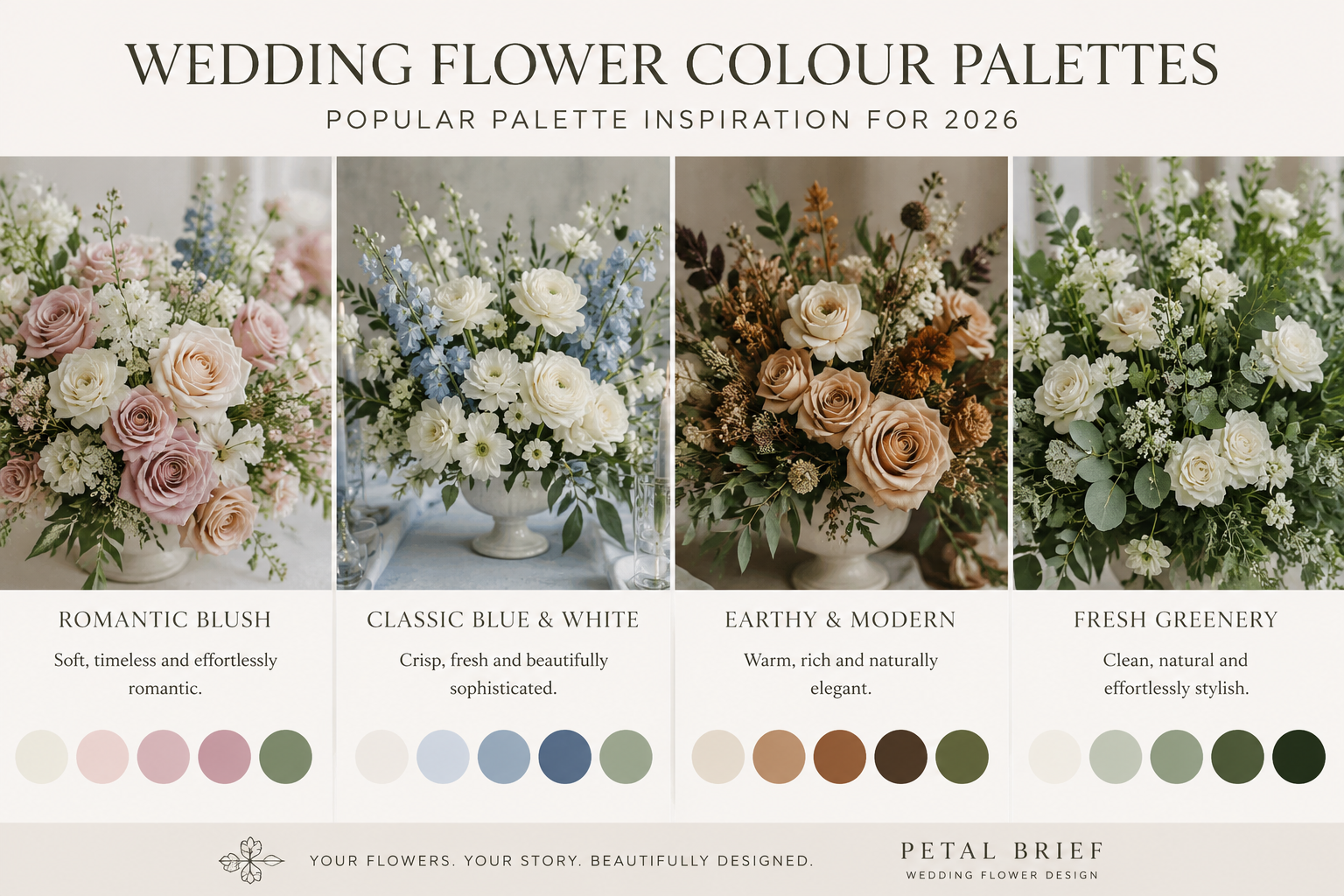
Four timeless wedding flower colour palettes to inspire your wedding style. From romantic blush tones to elegant blue and white, earthy neutrals and botanical greens, choosing the right palette creates a cohesive and memorable wedding design.
Why Your Wedding Flower Colour Palette Matters
More Than You Think
Choosing your wedding flowers is about much more than selecting your favourite blooms. The colours you choose become one of the strongest visual threads running throughout your entire wedding day, connecting every element from the ceremony to the reception.
A thoughtfully planned flower colour palette creates harmony between your venue, décor, bridal party attire, stationery and photography. When these elements complement each other, your wedding feels intentional, elegant and timeless rather than a collection of unrelated details.
Your florist will naturally focus on designing beautiful arrangements, but deciding on the overall colour direction should begin long before individual flowers are selected. Starting with a clear palette makes every subsequent planning decision easier, helping you communicate your vision confidently while reducing the risk of expensive last-minute changes.
Colour also has a powerful emotional impact. Soft neutrals create a romantic, understated atmosphere, while vibrant tones bring energy and celebration. Rich jewel colours evoke luxury and drama, whereas delicate pastels offer a timeless elegance that photographs beautifully in natural light.
Another important consideration is longevity. Wedding trends evolve every year, but a carefully balanced palette inspired by your venue, the season and your personal style will remain beautiful for decades. Your photographs should feel just as elegant on your twenty-fifth anniversary as they do on your wedding day.
Rather than asking, "What flowers should I have?", a better question is:
"What feeling do I want guests to experience when they walk into our wedding?"
Once that feeling is defined, selecting flowers becomes a far simpler and more enjoyable process.
Ask Yourself
If someone described your wedding in just three words, what would you want them to say?
Romantic and timeless
Modern and elegant
Soft and natural
Colourful and joyful
Luxurious and dramatic
Classic and formal
Your answers become the foundation for your wedding flower colour palette.
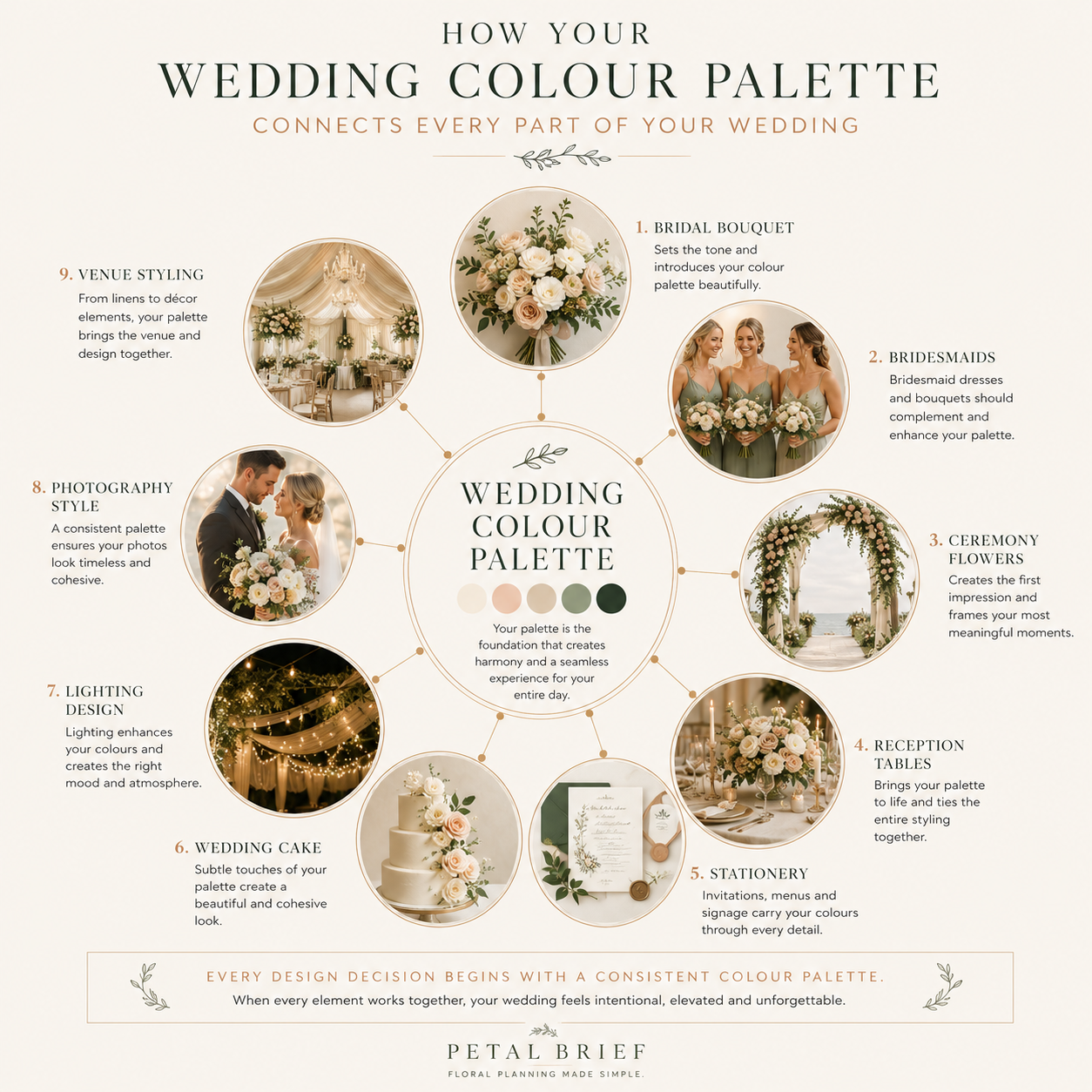
How Your Wedding Colour Palette Connects Every Part of Your Wedding | Petal Brief Infographic
Start with the Feeling, Not the Flowers
One of the biggest mistakes couples make is choosing flowers before deciding on the atmosphere they want to create.
Professional wedding designers rarely begin by asking which flowers they like. Instead, they ask a much more important question:
"How should your wedding feel?"
The answer to that question influences every floral decision that follows.
Your guests won't remember that your bouquet contained twelve David Austin roses or that your centrepieces featured Italian ruscus. What they'll remember is the overall feeling the space created when they arrived.
Did it feel romantic?
Elegant?
Relaxed?
Luxurious?
Modern?
Natural?
Those emotions are created through colour, texture, lighting and composition working together—not by individual flower varieties alone.
Once you've defined the feeling you want, selecting flowers becomes significantly easier because every choice has a purpose. Instead of asking whether a flower is beautiful, you begin asking whether it supports the atmosphere you're trying to create.
This simple shift changes the entire planning process, but always comes back to what you like.
Let Your Venue Lead the Colour Palette
One of the biggest misconceptions in wedding planning is that your flower colours should be chosen before your venue.
In reality, experienced wedding designers almost always work the other way around.
Your venue already has its own colour palette. The architecture, flooring, walls, ceilings, furniture, gardens and even the natural light all contribute to the atmosphere of the space. Your flowers should enhance these existing characteristics, not fight against them.
When flowers work in harmony with the venue, the entire wedding feels effortless and beautifully considered. Guests may not consciously recognise why everything looks so elegant, but they instinctively notice the sense of balance and cohesion.
By contrast, even the most expensive floral arrangements can feel disconnected if they clash with the surroundings.
Think of your venue as the canvas.
Your flowers are the finishing brushstrokes.
Begin by Looking Beyond the Flowers
Before choosing a single bloom, spend time studying your venue.
Ask yourself:
What colours already dominate the space?
Is the venue warm or cool in tone?
Is it filled with natural stone, timber or modern glass?
Does it feel formal or relaxed?
How much natural light enters during your ceremony and reception?
Are there existing gardens, trees or water features that become part of the backdrop?
These details provide valuable clues about which colour palettes will naturally belong within the space.
Professional wedding designers often spend as much time analysing the venue as they do discussing flowers.
Different Venues Favour Different Colour Palettes
There are no strict rules, but certain colour palettes consistently complement particular venue styles.
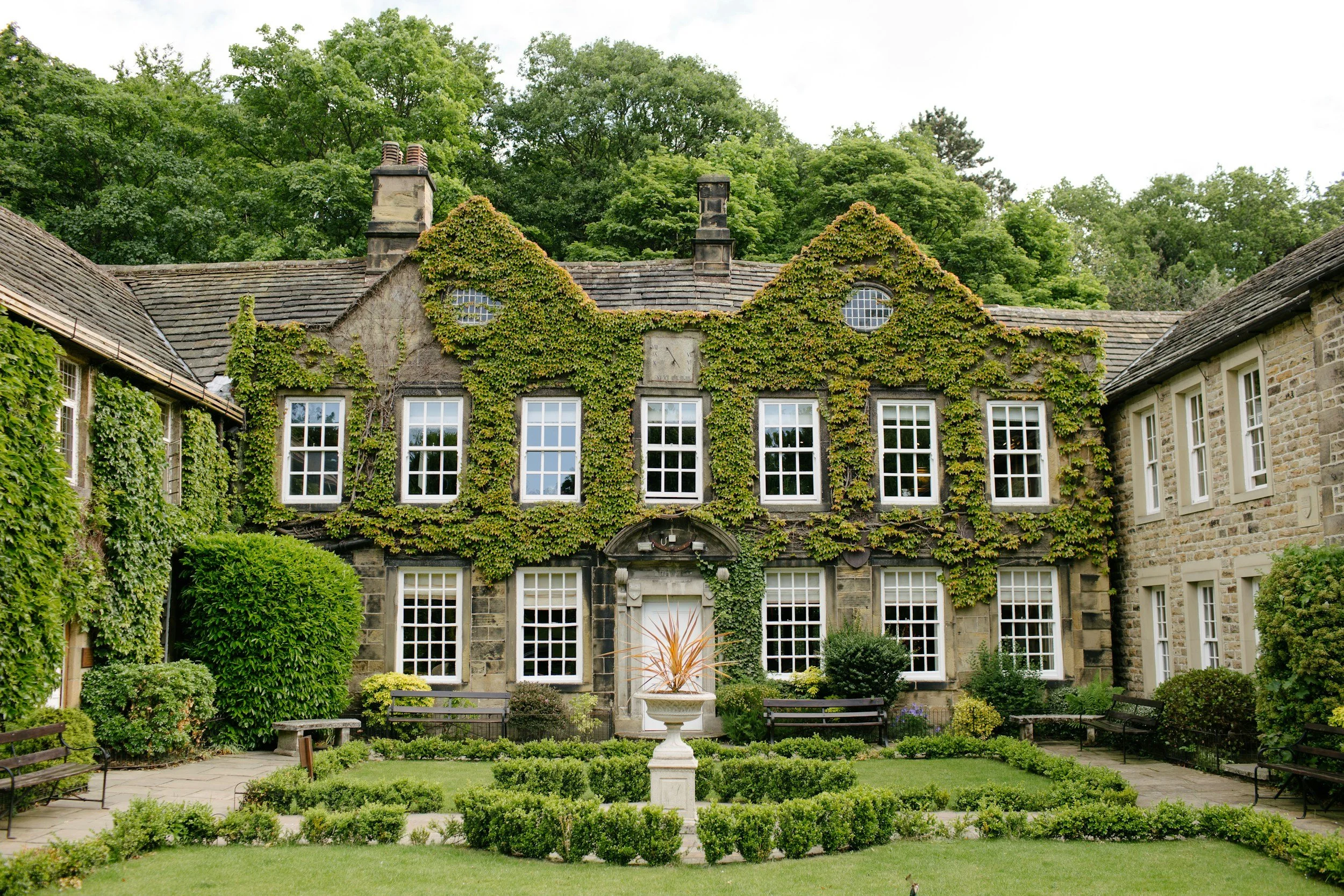
Historic Country Houses & Manor Estates
Stone buildings, antique interiors and mature gardens pair beautifully with timeless palettes.
Consider:
Ivory
Soft white
Champagne
Sage green
Blush
Dusty rose
These colours enhance the elegance of historic architecture without competing with it.
Luxury Hotels & Ballrooms
Large chandeliers, polished marble, high ceilings and formal décor can support richer, more dramatic colour combinations.
Popular choices include:
White and emerald
Burgundy and blush
Deep plum
Antique gold
Soft black accents
Rich greenery
These venues can comfortably carry stronger contrasts while maintaining sophistication.
Garden Weddings
Nature has already provided much of the colour palette.
Rather than overpowering the surroundings, choose flowers that complement the existing landscape.
Beautiful options include:
White
Cream
Soft peach
Pale yellow
Lavender
Fresh greens
The result feels organic, romantic and timeless.
Coastal Weddings
Whether overlooking the ocean or beside a lake, coastal venues benefit from colours inspired by the surrounding landscape.
Think:
Soft ivory
Sand
Sage
Mist blue
Pale peach
Driftwood neutrals
Avoid colours that feel too heavy or saturated, which can compete with the openness of the setting.
Barns & Rustic Venues
Natural timber and exposed beams create warmth.
Earth-inspired palettes work exceptionally well.
Examples include:
Terracotta
Rust
Olive
Warm ivory
Caramel
Soft peach
These colours celebrate the venue rather than trying to disguise it.
Contemporary & Industrial Spaces
Minimalist venues offer the greatest flexibility.
Concrete, steel, glass and neutral architecture create a clean backdrop that allows flowers to become the focal point.
Successful palettes often include:
White and green
Monochrome
Soft taupe
Bold accent colours
Sculptural floral installations
Simple palettes frequently create the greatest impact.
Work With the Light
The same flowers can look completely different depending on the light.
A venue flooded with natural daylight softens colours and enhances pastels.
Evening receptions lit by candles and warm lighting make burgundy, plum, terracotta and deep greens feel richer and more luxurious.
Always consider how your flowers will appear at the exact time your guests experience them—not just how they look during setup.
One Venue, One Story
Your wedding should feel as though every element belongs together.
When the venue, flowers, stationery, table styling, lighting and photography all share a common colour direction, the entire celebration becomes more memorable.
That sense of harmony is rarely accidental.
It is created by making thoughtful decisions from the very beginning.
Choosing Colours That Work Beautifully in Every Season
The season you choose for your wedding does far more than determine the weather. It influences the flowers available, the quality of light, the colours of the surrounding landscape and ultimately how your floral arrangements will look and feel on the day.
One of the easiest ways to create a naturally beautiful wedding is to work with the season rather than against it. Flowers that are in season tend to be fresher, more abundant and often better value, while the colours found in nature provide inspiration for palettes that feel authentic and timeless.
Although it is possible to source many flowers throughout the year, allowing the season to guide your choices often results in a more harmonious design and can reduce both costs and environmental impact.
Spring – Fresh Beginnings
Spring is synonymous with new growth, delicate colour and soft natural light. Gardens begin to bloom, trees regain their leaves and the landscape is filled with subtle shades that perfectly complement romantic floral styling.
Spring colour palettes are often light, airy and understated, making them ideal for couples seeking an elegant and timeless celebration.
Ivory and Sage
Blush Pink and White
Peach and Cream
Lavender and Soft Grey
Butter Yellow and Green
Dusty Blue and White
Popular seasonal flowers include tulips, ranunculus, anemones, narcissus, sweet peas, lilac and blossom branches, all of which bring movement and freshness to floral designs.
Spring weddings pair beautifully with garden venues, country estates and outdoor ceremonies where the surrounding landscape becomes part of the overall design.
Summer – Bright, Vibrant and Full of Life
Summer offers the greatest variety of flowers and the longest daylight hours, creating endless opportunities for floral creativity.
Whether you're planning a garden party, a destination wedding or a grand hotel celebration, summer provides flexibility in both colour and flower selection.
The stronger sunlight naturally enhances colour saturation, making even soft palettes appear vibrant.
White and Botanical Green
Coral and Peach
Soft Blue and Ivory
Lemon and White
Blush and Apricot
Classic White with Seasonal Greenery
Garden roses, dahlias, hydrangeas, cosmos, delphiniums and zinnias are among the many flowers that thrive during the summer months.
If you're marrying in a warmer climate, discuss flower durability with your florist, as some delicate blooms can struggle in prolonged heat.
Autumn – Warm, Rich and Textured
Autumn introduces one of the most distinctive colour palettes of the year. As leaves turn golden and the light becomes softer, floral designs naturally shift towards richer, earth-inspired tones.
Autumn weddings often feel luxurious without appearing formal, making them especially suited to rustic venues, vineyards and historic country houses.
Terracotta and Cream
Burgundy and Blush
Rust and Olive
Copper and Ivory
Plum and Sage
Mustard and Warm White
Seasonal foliage, berries, chrysanthemums, dahlias and textured grasses add depth and character while celebrating the changing landscape.
Winter – Simplicity
Winter weddings have a unique elegance that relies less on abundance and more on contrast, texture and atmosphere.
With bare trees, crisp air and shorter days, flowers naturally become one of the focal points of the celebration. Candlelight and evening receptions enhance richer tones, while restrained palettes create a timeless, luxurious feel.
White and Evergreen
Ivory and Champagne
Burgundy and Emerald
Deep Plum and Gold
White with Silver Accents
Monochrome White and Green
Winter flowers such as amaryllis, hellebores, paperwhites and evergreen foliage create striking arrangements without needing excessive colour.
Looking Beyond the Calendar and where you are geographically
Not every wedding season looks the same around the world.
A June wedding in Ireland is very different from a June wedding in Dubai, Tuscany or Sydney. Climate, natural surroundings and local flower availability all influence which colours feel most appropriate.
Instead of following seasonal trends from social media, take inspiration from your own venue and its environment. This approach creates a wedding that feels connected to its location rather than simply following fashion.
